Meredith DeSantos on Human Design for Business
Dec 23, 2025
“I don’t think anyone’s actually stuck, because energy is always moving.”
Key Takeaways
- Use Human Design for business to build your marketing and workload around your energy, not guilt.
- Treat imposter syndrome like a safety response, then pair mindset work with small action.
- Stop selling through pain spirals because it keeps buyers stuck, and it makes your brand forgettable.
- Swap hustle for tiny aligned steps that compound fast and protect your nervous system.
- Build your content around storytelling that moves people toward a future, not shame about the present.
Listen on Spotify | Listen on Apple Podcasts
Understanding the Early Signs of Entrepreneur Burnout
If you’re building a business after corporate life, you know the pressure you put on yourself…. Replace the big salary. Prove to yourself and everyone around you that you can do it. Keep showing up online even when your brain is fried, and you are tired of performing confidence.
Here’s the twist. Burnout is not always a workload issue. Sometimes it is a design issue. Very often, when you leave a corporate role, you build a business in a way that fights your energy, decision-making style, and tolerance for stress.
In this episode, I’m joined by Meredith DeSantos, a former Hollywood head of development who has transitioned into a Human Design and NLP practitioner. We talk about why high achievers can look successful and feel miserable, why “motivation” is often a nervous system response, and how Human Design for business can change the way you market, lead, and grow.
“I was my most miserable when I was at these things, but you would think I was having a ton of fun.”
Spot the real reason success feels heavy.
Most coaches and consultants think they are burning out because they need better systems. Systems help, but they do not fix misalignment. If your work demands one type of energy and you naturally operate with another, you will feel like you are pushing a car uphill with the handbrake on.
Meredith names a pattern that a lot of high achievers hate admitting. The outside can look brilliant while the inside is unravelling.
“There is a front, there’s an ego front.”
In Hollywood, that “front” is obvious. In business, it can be subtler. It shows up as constant content creation that drains you. Or as building an offer that you can sell, but can’t deliver without resentment. It shows up as chasing the next strategy because you think you are behind.
Here’s a simple check in you can do with yourself.
Ask yourself what success is costing you. Is it: Sleep. Patience. Health. Your ability to think clearly? If the cost keeps rising, that is not a badge of honour. It is a warning light.
How to apply this today
- Write down the three parts of business that drain you most.
- Circle the one you keep doing “because you should.”
That is usually where alignment is missing.
Next step
Start treating burnout recovery for entrepreneurs as a strategy, and not self-care fluff.
Reframe imposter syndrome as protection
Imposter syndrome is not proof you are unqualified. Meredith says it plainly.
“It’s technically, it’s our brain trying to keep us safe.”
That matters because it changes what you do next. If you treat doubt like a character flaw, you try to bully it away. If you treat it like protection, you can work with it.
Meredith shares that she saw imposter syndrome among people making serious money. That detail lands. It stops the fantasy that confidence magically appears at a certain income level.
“They were making a quarter of a million dollars plus and had insane imposter syndrome.”
So what do you do with that? You stop waiting to feel ready. You build evidence. You take a small aligned step and let reality teach your brain you are not in danger.
How to apply this today
- Pick one visibility action that feels slightly uncomfortable, not terrifying.
- Do it once. Then stop and write what actually happened.
- Repeat until your brain learns the new baseline.
This is how to beat imposter syndrome in your business without forcing confidence.
Use Human Design for business to work with your energy
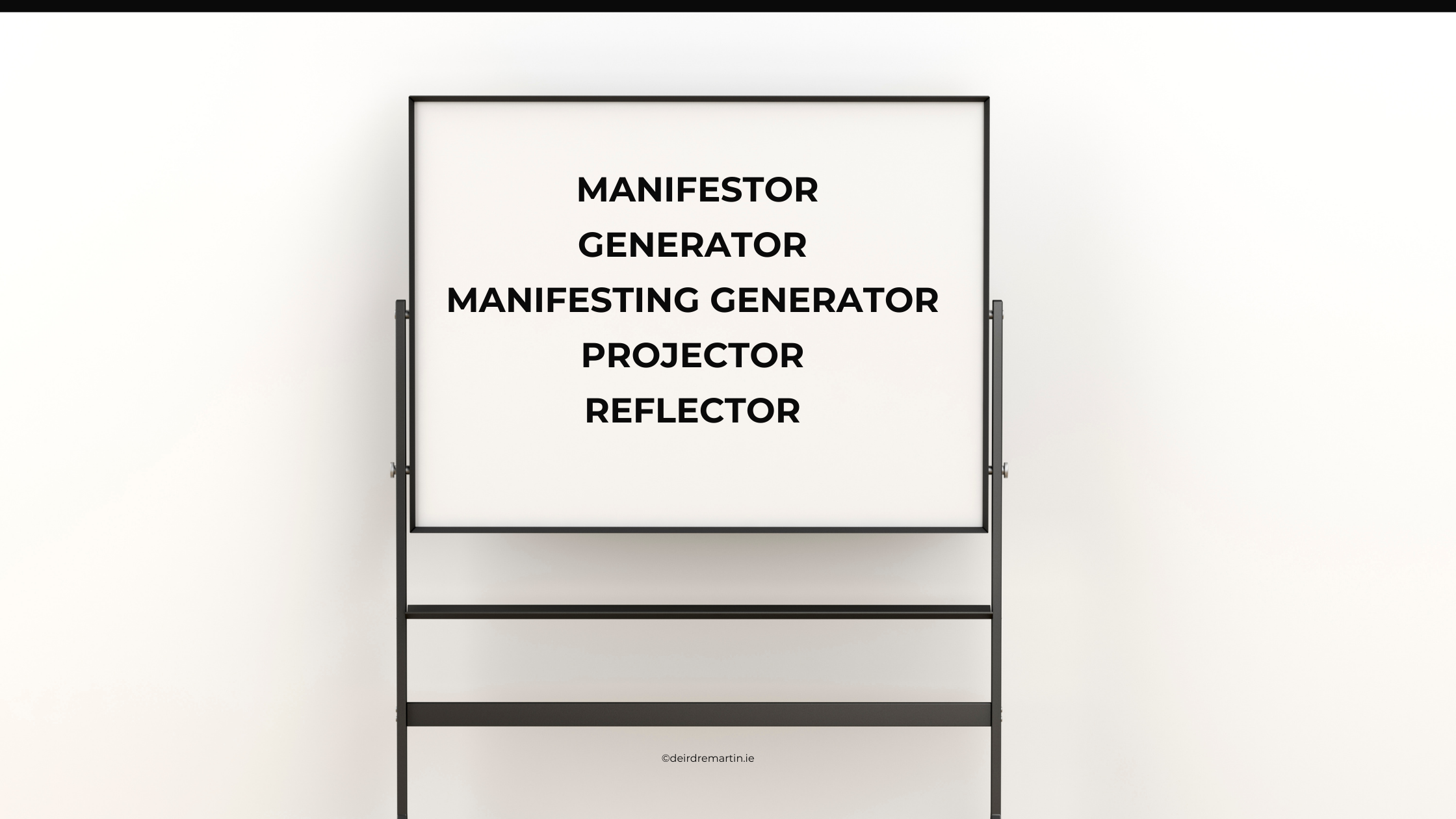
Human Design is not a productivity hack. Meredith explains it as a blueprint based on your birth details, with five energy types that influence how you work, decide, and recover.
“That’s basically astrology on steroids, but it combines science.”
Whether you love Human Design or you are skeptical, the practical takeaway is useful. People burn out when they ignore their natural energy patterns. Meredith notes that some Human Design types can sustain consistent output when aligned, while others require different rhythms and lead-generation approaches.
This is why Human Design marketing is compelling for ex-corporate business owners. Corporate teaches you one way to perform. Your business needs to know the way you are built to help you perform your way.
How to apply this today
- Identify your energy type if you already know it.
- If you don’t, start with what you notice. Do you get energy from doing, guiding, initiating, or reflecting?
- Build one week of work around your strongest pattern, then compare it to your usual week.
Outcome
You get a business that feels clearer. Your content gets simpler because you stop copying someone else’s cadence.
Stop using pain as your content strategy
This section is for the internet at large! Meredith calls out bro marketing and the obsession with pain points.
“There’s a ton of bro marketing out there, and it just does not work on a psychological level.”
This is where neuroscience matters. If your content keeps a person in a negative emotional state, you might get attention, but you do not build trust. You create a loop of shame and urgency. It makes people numb. It also makes your brand feel like every other brand.
Instead, Meredith argues for storytelling marketing that moves people toward who they want to become. That is where motivation lives.
How to apply this today
- Replace one pain-point post with a transformation story.
- Show what changed, what it cost, and what became possible after.
- Invite the reader into a future, not a diagnosis.
You’ll then create content that converts because it helps the buyer see themselves winning.
Make NLP practical and stop lying to yourself
Meredith is blunt about affirmations. She is not anti-mindset. She is anti-delusion.
“If we say I’m a millionaire and we’re not a millionaire, we know we’re lying to ourselves.”
She explains NLP through the lens of reprogramming old trigger points. The story she tells about early shame and visibility clearly illustrates how small moments can shape adult behaviour.
The key idea is not the exact memory. The key idea is the pattern your brain learned and the way you can update it.
How to apply this today
- Name the behaviour you want to change, like fear of being visible online.
- Trace it back to your earliest memory of that feeling.
- Work with a qualified practitioner if you want support, and choose someone you trust.
Your nervous system stops treating growth as danger when you apply this.
Build momentum with tiny aligned steps
If I could tattoo one line from this episode onto every perfectionist’s forehead, it would be this section. Meredith rejects the myth of stuckness.
“I don’t think anyone’s actually stuck.”
She goes further. If you have the roadmap and you do not move, you are not stuck. You are avoiding. That may sound harsh, but it is honest. It is also freeing because it gives you power back.
She also makes a great argument for messy action. Perfection is imaginary. Strategy without action is entertainment.
How to apply this today
- Pick one action that moves revenue, not vanity.
- Do it before you optimise it.
- Review, adjust, repeat.
You build aligned business growth that does not require self-betrayal.
Frequently Asked Questions
What is Human Design for business used for?
It helps you align work style, marketing approach, and decision-making with your natural energy patterns.
Do I need my exact birth time for Human Design?
You get the energy type without an exact time, but more precision can refine the reading.
Is imposter syndrome a mindset problem or a nervous system problem?
Often, it is a safety response, so pair mindset work with small actions that build evidence.
What is NLP in simple terms?
It is a set of tools that helps you change subconscious patterns by revisiting and reshaping old triggers.
Does storytelling marketing outperform pain-point marketing?
Storytelling can move people toward a future identity, which is more motivating than repeating what is wrong.
How do I stop burning out while scaling?
Reduce misalignment, take smaller aligned steps, and build a work rhythm that matches your energy.
Where can I learn more about burnout from an authoritative source?
The World Health Organisation describes burnout as an occupational phenomenon and outlines its dimensions.
Related Articles and Resources
Connect With Meredith DeSantos
- MeredithDeSantos.com - Meredith’s website and primary hub for working together.
- Instagram @meredithdesantos - Where Meredith shares content and teachings.
Connect with the Host — Deirdre Martin
🌐 deirdremartin.ie
📱 LinkedIn
🧠 Work With Deirdre: Book a call → https://calendly.com/deirdremartincx/first-business-soiree-instagram
Watch or Listen to the Full Episode
Apple Podcasts → https://podcasts.apple.com/us/podcast/the-master-your-business-podcast/id1667327376
YouTube → https://youtube.com/@deirdremartinmyb?si=haAZF5yY4X8pYSbN
Tools Mentioned + More Resources
- Substack - A platform for building a newsletter and community, mentioned via Episode 158. https://substack.com
- Neuro Linguistic Programming - A modality Meredith uses to reprogram subconscious patterns and reduce triggers.
Full Transcript
[00:00:00]
[00:00:00] Why success can feel exhausting instead of fulfilling
Deirdre Martin: If you've ever hit a level of success that looks shiny on the outside, but felt like absolute chaos on the inside, this episode is going to hit a nerve because here's the thing, so many entrepreneurs think that burnout happens because they're doing too much. No burnout happens when you're building a business that isn't built for you.
And today's guest learning that the hard way inside, one of the most glamorized, ego-driven, smoke and mirror industries on the planet. I'm your host, Deirdre Martin, business mentor, bestselling author, and the woman who will lovingly call you out when you're building a brand that's fighting your own nervous system.
And today we are going behind the curtain with Meredith. Des Santos, former Hollywood Head of Development, who climbed fast, burned bright, and then burned out her story. Wild, her Insight even better. Meredith now helps entrepreneurs and creative leaders build brands from the inside [00:01:00] out using human design, NLP and deep subconscious rewiring.
So your business stops training the life out of you and actually fits how you are built to lead. In this conversation, we get into this stuff. People never talk about the hidden trauma patterns that show up as imposter syndrome. Why working harder keeps you stuck, how your energy type influences your marketing momentum and your burnout, and why tiny, little aligned steps outperform perfection every single damn time.
By the end of this episode, you'll see exactly why you feel the way you do. What's been secretly running the show and what it looks like to build a business that doesn't fry your nervous system? All right, let's get into it.
Meredith, welcome to the Master Your Business Podcast.
Meredith DeSantos: Thank you so much for having me. I'm excited.
Deirdre Martin: Well, it's gonna be fun. It's actually even more fun 'cause we're actually in the same time zone right now, which is rare when I'm talking to somebody from la.
[00:01:59] Meredith’s rise in Hollywood and the burnout no one talks about
Deirdre Martin: [00:02:00] So let's start first with your bio, because.
Because I wanna talk about where your bio that you sent us and that I've just introduced you with where it doesn't go. And what I mean by that is what actually happened behind the scenes when you decided to leave Hollywood? And I'm like, don't give us the polished version. Tell us like what was going on, what did it feel like?
All the things.
Meredith DeSantos: Sure. Well I'm from Boston, so I'm not gonna give you the polished version. It's not within me. So what happened behind the scenes? Oh, you know, there are great things about the entertainment industry and it built part of who I am and how I'm able to do marketing and how people build businesses.
It also, I think is smoke and mirrors. Behind the scenes. I'm someone, and I've been open about this on other podcasts, and even when people ask me, and if you look through my content, you'll see it at times, but I'm someone who has been through trauma, and I think that in the entertainment industry in particular it attracts [00:03:00] people who have had a particular level and there's a hazing process.
That goes through it, and a lot of people are too afraid to talk about it because they are still in it. But, you know, I'm not afraid to, and I, it wasn't uncommon for me to be at a business meeting and men saying, they were gonna marry me and kind of fight over who was going to, yes, it was very weird and me feeling like I was in an alternate universe because none of them would ever marry me.
Like I was not interested at all. They were all 20 years older than me. And and also knowing I was there to play the part of the woman at the table of men, and it was a very weird place to be because it was also preying on. Some things that had happened in my life earlier, and so it was kind of seeing the progression.
Of that while also I loved building projects. Like I became the head of development really early, was helping running [00:04:00] a company before the age of 30. And I was working with a-list writers, a-list directors, and I would take a concept and then push it to production and then the production side of the company would take it on and it was like building little mini.
Companies at the same time. And I just love that process of seeing the pieces or creating the puzzle. And when I gave birth, that was when I really gave birth to myself, I would say, where I no longer had time for all the bs. And so I, you know, quit the entertainment industry because I was simply done with it.
I have a few passion projects, one that is about counter trafficking that I've been doing for 10 years, that I'm still, that's still moving, and things like that where I will still have my toe in, but I'm not afraid to say like, it's not what it seems.
[00:04:53] The hidden trauma patterns behind high achievement
Deirdre Martin: Hmm, interesting because like from the outside you just see the shiny glitzy glam and the red carpet [00:05:00] stuff and you know the movies hitting in the box office, but you don't hear about all that stuff really behind the scenes, of course there was the Me Too campaign, but yeah.
Other than that, it's like the day to day. What's it really like? And I think people have this glamorized version of what it looks like, right?
Meredith DeSantos: Oh yeah. And most people aren't making a lot of money. And I think that people think that. Everyone in the entertainment industry is making a ton of money.
If you're not at a studio level and a higher level within a studio framework, you're not, assistants are making, at least when I worked at a talent agency, we were making under $25,000 a year, which is you can't live on in LA unless you're having five roommates in one room. And, that's the norm.
And then even when people become managers and agents, there's a constant hustle that I think also was breaking me, was I constantly thought I'm replaceable, so I need to continue to work harder than people who are even above me in the company. And that's also how I rose [00:06:00] to the top fast. But then it ended up burning me out completely.
But there's that sense that I'm replaceable, I'm replaceable, I have to keep hustling. And some people are really made for it and just transform themselves and go and others aren't. And I, yeah, I think it's a side we don't talk about. And I think that if more people talked about it, we would uncover a lot more, for a lack of a better word, insidious stuff going on.
Deirdre Martin: And you mentioned you made it to the head of development before 30, which is incredible. Mm-hmm. And you mentioned burnout, but I'm curious, how did that, I wanna say rise in your career, how did that shape your relationship with success or speed with that Sure. Grind faster thing? Yeah.
Meredith DeSantos: Yeah. I think that one part that you touched upon was it's all glitz and things like that.
I think it's a front, and I actually wrote about this last night for my newsletter. So it's funny we're talking about it, is that. There is a front, there's an ego [00:07:00] front, right? So we see all the things on the red carpet, and then when you're behind the scenes, you feel like you have to keep up with that.
And so you're going out to drinks, you're chasing the next it thing. You're wearing certain clothes, or at least I did. You're buying a certain car all. Things that most of the time you're living outside of your means and you think that's what success is, and it kind of messes with you because when I was rising in the company, I was going to the Cannes Film festival.
I was going to China, I was going to all these places and staying in for. Star, if not better hotels, and I was next to some really powerful people in Hollywood at these events. And it gets to you where you think the outside matters more. And what no one ever realizes, and I feel like this applies to any person, is that we don't know what that person is experiencing in the inside.
Because for me, I was my most miserable. When I was at these things, but you would think I was having a ton of fun. [00:08:00] And I think that sometimes we compare our outsides to someone else and we don't know again what's happening in the inside. And so while I was rising and while I was. Still loving what I was doing, helping, I love helping writers and helping people build their projects and build their companies and seeing them become a reality.
It's one of my greatest passions to help other people's dreams come true. But not at the cost of my own inner self, my own soul. Not to sound dramatic, but that's what it felt like for me.
[00:08:32] Imposter syndrome through a neuroscience lens
Deirdre Martin: Yeah, and I think that sounds like it was a great lesson, to arrive at that and really know and understand that that's what you wanted and that's what was gonna help you move forward to where you are today, which is working with creative teams to like, I suppose you've moved from managing creative teams to building brands now, and you said in your bio as well, you're doing that from the inside out, so mm-hmm.
What does that mean in practice?
Meredith DeSantos: I noticed a [00:09:00] lot when I was an executive that I knew how much all these writers and directors were making 'cause I negotiated their deals right? And they were making quarter of a million dollars plus all the way up and had insane imposter syndrome. And I think that's prevalent in a lot of people who are on the outside, very successful and a lot of actors have openly talked about it.
But it was really crazy for me.
[00:09:24] Why affirmations don’t work the way you think
Meredith DeSantos: And so I started, at the time, I was very into neuro-linguistic programming with if anyone doesn't know what that is, Tony Robbins is like the king of it. And I was applying it to my own life. At times it wasn't working. I would say I laugh because during this time I was doing a lot of affirmation work and I had post-its all over my mirror, like, I am beautiful, I am successful, all these things.
And I would be like screaming at myself in the mirror and like it doesn't work that way. I don't believe affirmations work that way. I believe we have to say an affirmation that is a goal. That is tangible backed by how we're gonna get [00:10:00] to that goal. Because if we say I'm a millionaire and we're not a millionaire, we're, we know we're lying our to ourselves, but I wanna be, you know, I'm going to become a millionaire and this is how I'm gonna do it is different.
And then you can hold yourself accountable. I. But that's where I started to really get into the mindset work. And I got certified in NLP 'cause I was so interested in it. And through my own experience I had mentioned that I had been through trauma therapy didn't work for me. I'd been in therapy since I was a kid.
I know why I am the way I am, I know the events that occurred. I wanna know how I can get over it. And in my own ex. Experience therapy just never helped me get over it. It was just having me come back and I've tried all different forms of it, and NLP is the one that helped me actually not have the triggers anymore.
And so, I started using that a little bit on certain rider when I saw him pause. Imposter syndrome was coming up. And then I saw that the drafts got in faster, that they were better. And I was like, okay, this is cool. This is like a holistic process to my [00:11:00] development. So then transition, when I started my own company and I had successful people in my life who I knew I could help, they had so much in imposter syndrome, or they had gotten to a certain level and on the outside they looked great, but they were breaking down in the inside.
And so for them, I fixed their inside. Before we scaled for the newer entrepreneur, there's still a sense of imposter syndrome. Just at another level. They don't think they can do it because they haven't seen themselves do it. So how do we use NLP and other energetics to really reprogram our subconscious to get on board while we're taking the action?
So that's where I really wanted to create it.
[00:11:36] Reprogramming subconscious triggers with NLP
Deirdre Martin: That makes so much sense and sounds really powerful and I think you're so right. Everybody at some point experiences imposter syndrome. And I think what for me, some of the realizations I've had is that imposter syndrome is. It's just simply doubt.
It's doubt. Yeah. And we all have doubt and it's technically, it's our brain trying to keep us safe. It's our amygdala going, Hmm. That might be a little [00:12:00] bit risky if somebody finds out that you're, you know, you're just wing. Yeah. But actually everybody else is. And I'd love to del. Into your film background and how that shows up in your client work.
For the people who are listening and you've like. Now peak their curiosity about what NLP is. Will you tell them a little bit more about what it is, Meredith?
Because I think people will be like, oh, that sounds interesting, but actually have no clue what it is or how to go about finding somebody who can help them with it.
Meredith DeSantos: Definitely. So, online, if you go to the board, you can find other NLP practitioners. I suggest really do not go with the first person you see, really get to know a person and do several consults and really trust your intuition because there's a ton of people who are certified in it and you wanna make sure you vibe with the right person.
There are people who do it for athletes. For entrepreneurs, for people in corporate America. So really finding someone who is within your niche [00:13:00] and what you're trying to achieve, I think is important. So take your time with researching and then what it is. So it was formed by several psychologists.
They took all the most powerful psychology modalities and created neurolinguistic programming. So it really has to do with our mind, the language that we speak and our processing. And the reason why short version, of course, that it wasn't accepted underneath being a therapy and why people aren't licensed is because the results were so fast so it wouldn't keep clients coming back and.
Of course, you know, some NLP practitioners do have people coming back, but I, how I do it is that I wanna empower people to be doing, to do it on their own. And because we all have the ability inside of ourselves to heal ourselves, we may need someone to activate the tools within us, but we don't need to access it through someone each time.
And I think that's what NLP if done correctly. Does for people. And so there are certain modalities [00:14:00] within it. One that's really successful is reprogramming your childhood events. So let's say I have the fear of being visible online. I just it makes me really nervous. And so if I trace that back and I think what's a memory of where I've been afraid to be seen?
For me, my first memory that comes up is when I was about to walk down the aisle, my dad said to me, how are you feeling right now? And I said, oh, I really hate it when all eyes are on me. And he was like, bad moment for that. And it was true, like, and then I walked down the aisle and I had to really find my husband to connect and not.
You know, almost disassociate. And then it's like, well, that's not the original memory. I know the original memories in childhood. And then I go to 12, and this is a process that a practitioner will take you through. I go to 12. I know that I did piano recitals and I was so nervous I would perform them.
Really stiffly, but a hundred percent correctly. Couldn't wait to get off the stage, but I know an event had to trigger that [00:15:00] before. And what it brings me back to, in your mind, in the process, will be brought back to an event usually between two and nine years old. Sometimes it can be 12 or 14, but usually between then and my first memory of not wanting to be.
Seen is in kindergarten. We had to test, what's your left hand? What's your right hand? I said that my right hand was my left hand and my left hand was my right hand. The teacher told me I was wrong. I felt a lot of shame. It was in front of everyone. Heard a few laughs. Is that true? Who knows, but that's what my kindergarten.
Self felt and I thought to myself, okay, I get to redo this next week and now I know which hands are correct. So I stood up the next week, I said my left hand was my left hand and my right hand was my right hand. And the teacher told me I was wrong. And I was, yeah, I was so confused. 'cause I knew I was right.
And as an adult, who knows if she was listening. Who knows if she was having a bad day. But as a kid, I'm not processing that obviously. And so from that moment forward, I never [00:16:00] wanted to stand up and say what was on my mind. And that's the trigger point. So what NLP helps is how do we reprogram that event because my fear comes from that singular event.
And so there are several methods that we bring people through to reprogram, to redo that event. You still wanna hold onto the tools that you learned that are helpful, but how do we reprogram the that event, creating a new event that your younger self needed. And through this whole process, it changes your neural pathways so that that trigger point isn't as strong anymore.
And there's other ways and tools to assist you with that. But that's kind of a little overview of it is really reprogramming childhood memories that are impacting us as adults.
Deirdre Martin: That makes so much sense. And like, oh my gosh, I can hear my daughter coming home from school going, mom, I had to stand up and read in front of the class and I kept getting all my words wrong and all of these things.
Now it turns out she's totally dyslexic. Mm-hmm. But she could hear the snickering and all of the things going on behind her. [00:17:00] And for her, getting her dyslexia diagnosis has helped remove all of that stuff from. Which is interesting, but I think you're so right, isn't it? Isn't it nuts as well?
Like how much impact those early stage people in our lives, teachers, family, carers have on how we grow up and how we shape and form and as we become adults and entrepreneurs.
Meredith DeSantos: Oh, a thousand percent. And especially being a parent, you see the moments where maybe your parents didn't have the tools.
I mean, my son is two, so I'm going through like, he's, I call him an emotional terrorist, not to his face, but my husband and I are like, whoa. And it's a lot. And thank God we have the tools to be patient, but it's really hard and I see the moments. Where my parents didn't have the tools and instead of getting resentful, I have so much empathy for my parents because I'm like, this is hard.
And one thing that is a big [00:18:00] memory that I think really impacted me and I try not to do with Jackson is telling him to do certain things. For example my dad would have us hug him every morning when we came downstairs. That on the surface feels very normal, but. There were definitely times I didn't wanna hug someone.
I personally don't like hug. I don't hug strangers. I'm not a hugger person. And what that taught me, and he didn't mean to teach me this, was that I had to hug men. And so that became a dangerous pattern later in life where I thought I had to do certain things. Like I'll never forget someone in high school, a guy told me to twirl in front of a table of guys.
And like I, I did it 'cause I, I was like, I remember I can be in that moment right now not knowing what to do. And that moment of my dad always having me hug him which was just a manners thing I know in his mind impacted me in that way. And so I really try to think like, what is, what am I doing is gonna [00:19:00] impact him later, if that makes sense.
Deirdre Martin: Totally. I'm constantly apologizing to my kids for the therapy that they're going to require when I'm like, I'm sorry, I'm just here doing my best. And I think that's all we can do. And yeah.
[00:19:15] Why bro marketing fails psychologically
Deirdre Martin: I'm curious for you, so let's bring it back a little bit to business now and with this film background that you have, which is so super cool.
How does that show up in your work now? Like what elements do you bring from that and are there moments where you catch yourself directing people's brand like a kind of a story or a movie?
Meredith DeSantos: Yeah, I think what relates is storytelling. There's good storytelling and there's bad storytelling. And so, just like any, we can see with brands right now, it's really about building community and having a storytelling element.
We see it through Haley Bieber's community around Herand Road. We see it. In Glossier, we see it in a lot of brands that are big, they're building [00:20:00] events and they even have some free events, and it's all about a community around them and you wanna be with them. And that is part of storytelling. And so that I always apply to a brand it, and it's important to know our story.
While still knowing our audience, and I feel like people really focus on pain points and there's a ton of bro marketing out there, and it just does not work on a psychological level. Yes. And it's gross. So it doesn't work on a psychological level because when you're saying like, you're burned out, you're this, you're that.
And speaking to pain points, you're not actually changing anything within the buyer's mind. They're like, yeah, I am a, you know, POS yeah, I really have burnout. Like it doesn't motivate them, it keeps them in their negative state. But if you use storytelling to tell your story, to tell a client success story, to try to bring value to the person who's reading the story and bring them in, when you bring someone into a story of where they want to be.
That [00:21:00] actually starts activating a part of their brain where growth mindset lives. And now they're envisioning using your product or your offer to actually have that transformation. But it's through storytelling. You're not telling them that their brain is telling them that through the story. And so people are gonna purchase faster that way, or you'll build a stronger community that way.
So that's really where I think I bring it in. 'cause I built stories for a living. And so I build storytelling into branding. And then I do have a partner, Mary Simmons, who handles all of the brand aesthetic, so fonts, colors. She's been doing this since Instagram was just a grid with pictures and she's built a vision.
So I love having her a part of the team to bring that in. And there's just a cohesion there. To your point of directing, I think more of my Boston mentality comes in 'cause I'm a very much doer. Like, I do not believe in excuses. I just do it and I realize that I have to adapt to the [00:22:00] client in front of me because they may not like the no bs.
They may need a little softness with my delivery. And so that's where I really find out in the beginning with, of a client. But I do break down all the steps they're gonna take each week. So yes, the direct, the directing comes in that way. But that's because I want them to reach their goals. And I don't want them to have analysis paralysis.
And that's what we're working on together. 'cause action is the best way to beat perfectionism. There's no such thing as perfect action. So, that's a long way of answering your question.
Deirdre Martin: I love that though. And I told. Agree with everything you've said, and you're so right in with the stories. It's the mirror neurons in the in our brains, right?
So when you tell a story and I'm like, oh my gosh, that story really resonates with me. What happens then is that builds familiarity. And familiarity is what builds trust. So yeah, I'm gagging on the bro marketing here for people who are listening, for people watching. You can literally see me throwing my fingers down my neck.
Go to the bro marketing. I totally agree right now, this year it [00:23:00] really feels like community is the key. It's the secret to unlocking success for businesses and entrepreneurs who want to grow. And I think that sense of belonging and just connectedness is more than ever needed with the crazy shit that's going on in the world right now.
Meredith DeSantos: Oh yeah.
Deirdre Martin: Right.
[00:23:20] What Human Design actually is and why it matters in business
Deirdre Martin: And Meredith, tell us, because you work with people who are in wildly different industries. I mean, you mentioned musicians to realtors. Is there a through line that you always find underneath their brands that surprises them more than you?
Meredith DeSantos: Surprises them. I think what's holding them back.
They think that something, what's holding them back and it's not actually what's holding them back. And I think that's what surprises them a lot. I think also I take a more holistic approach to branding and marketing where I look at their human design and if anyone listening is like, what the hell is that?
That's [00:24:00] basically astrology on steroids, but it combines science. Based on the time, date, and location that you're born. It has quantum physics, Kabbalah, I ching, the chakra system and more to create an energetic blueprint of you. And when we move within that energetic blueprint, we deprogram from society.
And that was a huge step when I left the entertainment industry to align with that. And so when it comes to marketing, there are specific aspects of someone's human design chart. That really will show what's authentic storytelling to you? What does your audience need to hear and how can we bring that all together with your branding?
So when I present that to people, they get shocked. 'cause it might be sometimes the thing they're trying to hide the most because it's protecting them or they're shocked. Most of the time when I do this for men, they're shocked because they finally feel like someone sees 'em. But I think it's also because they haven't seen themselves in that way 'cause they've been shutting down in a different way.
So, I think that's what surprises 'em the most.
Deirdre Martin: [00:25:00] And can you tell people a little bit more about human design? So like, what if you were to do human design with me I don't even know how, what's the verb around it? Do you do human design?
Meredith DeSantos: Yeah. It would be a reading. Yes. We would do a human design reading.
And we should do this on my podcast. I would love to do it for you.
[00:25:19] The five Human Design energy types explained
Meredith DeSantos: And so there are five energy types, like the main thing to learn from human design. So I would get your birth information, it would generate a chart. I would be able to read it to you immediately. The biggest thing to align with is your energy type.
So there are five energy types, generators manifesting generators. Projectors, manifestors and reflectors. So generators make up most of the world. They are the builders, so they don't burn out as long as they are aligned with what they're doing, and it feels like a hell yes for them. Generators and manifesting generators are usually people pleasers because they were valued as children by what they did.
So they actually don't know what they wanna do because they always just took things on as a kid. And so [00:26:00] now as an adult, they might say, you think that's you? Now they might say, simple things like someone saying, do you wanna go see a movie? And they'll say yes without even thinking. And then the movie date will come and they're like, I don't wanna do this.
So they might flake or they go and they're resentful about it. Same thing can apply for the job that they take. And generators are built to be doctors and, lawyers. But what if you're a lawyer and actually your passion is painting? You're gonna burn out as a lawyer, you're gonna hate it.
You need to be a painter. So that's in short what really defines a generator. Manifesting generators are hybrids of a manifester and generator. So they have that generator side, but they also are fast moving and insanely creative because of the manifester side. And so they feel like they have a DD 'cause they have so many ideas, but they don't know where to move.
And their greatest task is gonna be feeling their way through things, not thinking their way through things. So if they ever hear, and this goes for a generator too. I should do this, I should do that. They're should-ing all over themselves. That's [00:27:00] your brain telling you what to do, not your intuition.
So it's gonna lead you the wrong way. So you have to really tap in to your intuition. And a manifesting generator's superpower is actually multitasking. So if they're looking at the task. They have to do for the week. Their gut might be telling them, skip Monday and Tuesday and go to Wednesday. Logically that wouldn't make sense 'cause we have to complete what's on Monday and Tuesday to get to Wednesday.
But actually the manifesting generator when they skip over steps, didn't have to do those steps. So their gut is saving them time. Projectors I'm a projector are the guides and seers. They're able to see things that others can't. They're able to put a lot of complex things together and distill them into easy information.
They really want to be seen. So, it's hard for them when they feel like they're not being seen and they have so much information and point of view to give, but they have to wait for someone else to hear it. So, if I give an opinion to one of my siblings and they haven't said to me, mayor, what's your opinion?
They're gonna think I'm bossy and completely disregard it, [00:28:00] even if what I'm saying is what they need to hear. But if I say, you know, I've been through something similar, would you like to hear what I have to say? And they say, yes, it will land. Same thing goes with. Clients, you can't chase like a manifesting generator and generator and manifestor can go after clients in their own ways.
Projectors can't because people are gonna be like, ick. So there's certain ways to really generate leads based on your energy. Type two. And then manifesters can manifest without the universe. They move really fast and their biggest thing is they have to tell everyone else around them. 'cause people can't catch up and can't read their mind.
They also feel. That they're the black sheep of the family. 'cause they literally repel people. But my reframe for that is how amazing you don't waste time with people who aren't meant to be in your world. While all of us waste time with people who may be using us, no one's gonna use you. They also, as children were told they were too loud, too much, and they're meant to be.
They're really the trendsetters. So to really unleash their voice. And lastly, [00:29:00] reflectors are really rare. Like 1% of the world is made up of reflectors. I've only had two clients that were reflectors and they are mirrors of the world. They mirror back what we need to see, what the collective needs. But they need a longer process with it.
So they need to take a full lunar cycle to make a really big decision, and they need to work with their environments and the people around them because their biggest pitfall is that they see the potential in other people, but people may not be there yet. So then they're kind of being used. And then an environment is super important.
But as a child, they were a chameleon. They adapted to whatever environment they were in or the people around them, boyfriends, girlfriends, and so later in life, they don't really know their identity. So it's really important to get aligned with what that is. And then there's so much more to human design, but that's the mo, the biggest aspect in a very fast way.
Deirdre Martin: Wow. It's very fascinating. It's very interesting and I'm curious, like do people [00:30:00] tend to have some of the characteristics of some of the other profiles too?
Meredith DeSantos: Yeah. So how that will work out is within other areas like the energy centers and how our energy flows, mirrors the chakra system. And there are a couple extras, but that's where things will pop up or in our fear gates.
'cause the spleen center holds fear gates. So, for example, I'm a projector, I can burn out, but like in my corporate job I worked really, really hard. I had no problem working until or. Until two or 3:00 AM and that's because I have certain energy centers within myself that are filled, that are for drive, that are for being able to move through stress.
But at the same time, because I can move through stress, I can burn out and leave myself last, which is what was happening. With my fear gates, if I have fear of inadequacy. So I'm trying to constantly prove myself there. That's where it's really coming from and how it can come in to the other energy types.
So I think there's parts of the [00:31:00] chart that could be adding to that and by really leaning in and looking at, okay, what am I trying to prove here? Then you kind of see how to flow with your energy type.
Deirdre Martin: That's so interesting because it sounds like there's a little bit of unlearning mm-hmm. That needs to happen too, to be able to flow energetically in the right way and really feel aligned.
And I think it's nuts how and from a neuroscience perspective, it's about your head, heart, and gut, which mm-hmm. Allows chakras and a lot of the things that you're talking about here. And with that, it's interesting, like when I see clients who are so aligned with what they're doing, they work hard because they're so passionate about what they're doing, but they don't burn out because, you know, they're loving it and it feels they're in flow. So it's important to see that.
So what I'm curious about is your clients, I'm sure they're high achievers. Mm-hmm. And they're coming to you because they want to unlock something. They wanna unlock that next level or achieve that next level of success. But I'm guessing that [00:32:00] sometimes you also help them slow down a little bit so that.
They don't burn out and experience some of the things like you did when you worked in corporate. Mm-hmm. So how do you help someone with the tools that you have in your toolkit to build that sustainable brand without them feeling like they're falling behind?
Meredith DeSantos: Sure.
[00:32:19] Tiny aligned steps versus hustle culture
Meredith DeSantos: The first thing we do is we go into their human design and I also combine neuroscience with it.
So when we're looking at fear gates, that's really where I started to bring in the NLP. I'm like, we're reprogramming these memories while we're taking small, tiny action. 'cause I am a firm believer that you can't just change the mindset. You have to be taking action at the same time. So that's when I really map out the plan whether that's we're just focusing on branding or we're uncovering a new, we have to revamp your offer idea.
We're always starting with human design and I have a ton of tools that I give my clients how to align with their design, daily checklists of what to do building them [00:33:00] rituals even building out a work schedule for them so that they are really aligned with it and then they have fun exploring certain other things, you know, when we really get aligned with how they're meant to.
B, and we deprogram them from the memories that are holding them in hustle culture or holding them back even from pursuing their passion. Or are they afraid of success? Things like that. We reprogram that and then it's okay, what's the next aligned step? Because I'm a firm believer that tiny aligned steps compound over time.
If I just shove a ton of things for someone to do, they're gonna burn out even if I've deprogrammed 'em, and we've done that together. So it's tiny aligned steps to get to where they want to be. And by uncovering these things and using these tools that I've created, they're able to stay aligned. Now, there are times where naturally, everyone.
Steps back, right? We have a little roadblock. We get back into old habits, but it's then propelling forward. And so I have, private Slack channels for all of my [00:34:00] clients where they're able to access me during the week. So if they're having a little issue, they pop in a message, I'm able to give them a reframe right away.
I'm really generous where I hop on a zoom if someone's really having an issue. And I'll do it if I can right away. But it's really just meeting where the client is at and giving them all the physical tools I can so they can align. I'm also a believer, you had mentioned stuckness at one point. I don't think anyone's actually stuck because energy's always moving.
And so it's take that messy action like you sometimes. I can't, you know, I compare it to the gym. If I get a gym membership and I am not going to the gym yet, I'm complaining 'cause I'm not putting on muscle. Whose fault is that? That's mine because I'm not bringing myself to the gym. Same with a coach.
If you are given the roadmap to get there, but you're not taking the tiny aligned actions. Then you're not going to get there. You're wasting your time. [00:35:00] You need to take the action and not be afraid of failing because perfect action doesn't exist because nothing's ever perfect. You're not planning for an obstacle to come up.
But if you're taking messy aligned action, an obstacle can come up and you can pivot because you're not stuck on a perfect outcome because you've planned for A, B, and C. So, did that answer your question?
Deirdre Martin: Absolutely. I mean, and really speaks to me and I hope it does to people listening too.
For me, from a Gallup strengths perspective, my main number one strength is activator. So it's getting shit done. It's moving forward with half baked ideas and just figuring it out as you go. Mm-hmm. It's. Messing up when you're asking questions to your fabulous guest on your podcast and just keeping going anyway.
Right? So it's like, you know, it's fine. It's just being human. And I think for a lot of people it's that compassion. That self-compassion with not having to be perfect. And it's that people pleaser thing as well, I think is so. Negatively impactful because when you're trying [00:36:00] to people please, all of the time, the person who ends up suffering the most is you. Right? And it's so hard. Okay, so let's start to wrap it up because I could keep asking you questions all day,
Meredith DeSantos: yeah, I'm having fun. Oh, thank you.
Deirdre Martin: Okay. So one of the things that I'm curious about is, let's say with the human design, have any of your clients gotten a reading and thought, no, that's not me, and not felt aligned with what's come through?
Meredith DeSantos: I have had one client. Who had to face trauma through the reading that was resistant. 'cause they had already thought they healed it with a family member, but it revealed that it had not been healed. So that, I would say that was something that we worked through. I have had a reading where someone and I relate to it, they found out they were a projector.
It's a new client that I have. And they were like, no, no, no. Can't be true. I'm not a projector, I'm a generator. And I was like, no, you are definitely a projector. [00:37:00] And I felt this same way you did. And so did almost every other projector when they found out. Let's lean into, give me evidence where you think you're a generator and let's actually talk through this.
And what happens is when they gimme the evidence, we also see they were burning out, they were getting really sick, their life was suffering, and then the lights turn on.
Deirdre Martin: Yeah, that makes sense. And fantastic. Okay, so let me see.
[00:37:25] Building a business that works with your energy, not against it
Deirdre Martin: When someone comes to you at a crossroads, because previously up until that point, they were known for one thing, but they want to pivot.
How do you help them? Get started with that? What question do you ask that cracks it open for them?
Meredith DeSantos: Sure. What's your why? Like, I believe in the why. I believe in messy journaling. 'cause most of the time people haven't been silent. Especially they know they wanna pivot, but they don't know where to go.
Again, this is how I believe I want to unlock things in other people. And so it's What's your [00:38:00] why for your pivot? What's your passion? What's your overall goal? 'cause sometimes the goal is what reveals what the pivot is or what's holding them back. And then how important is it to you to reach that goal?
And I do that no matter, even if someone's coming to us for social media, I make them do this too. Because we always have to anchor back in. And so, that's one of the ways we start, obviously with their human design, because that can reveal a lot. I had a client come to me. She had been in a VP at Paramount.
She had been let go. She kept applying for jobs, having interviews, wasn't getting the jobs. So I did her human design and showed that storytelling was deeply ingrained, like she was meant to be a writer and do storytelling. And then a year later she came to me and she said, I'm finally ready. Please help me start.
So she has a bunch of book ideas. I said we need to, you know, she was working with someone to put her book into a proposal and all those things. And then [00:39:00] Substack was where we wanted to start her to start building that community and also posting on social media. So we went to her house, she happens to live in la.
We filmed a ton of content with her and planned out that content. And then we created months of content for her based on our goals. And we were pivoting based on what we were. Seeing. And within the first day that she posted her first post and announced that she was on Substack, her substack was number six in business in 24 hours, and then she made a thousand dollars in a day.
So that was a really exciting thing to see where the pivot. We can have, this is one of my big things with manifestation too. We can want something, she had wanted to write a book for a very long time. We can want something, we can put it out to the universe, but if we're not taking action towards it, the universe isn't gonna bring it to us.
It doesn't just come and sit on our lap. Like people who wanna be an actor and thinking like a coffee shop, they're gonna get [00:40:00] stopped by a famous director. And that's how they're gonna get their break. Like, doesn't work that way. Sorry. Maybe worked for one person and they must have been incredibly good looking.
But like at the end of the day, that's not how it works. And they were probably working behind the scenes and the universe brought that to them. It wasn't, you know, so. What that brought for her when she finally took that step. I'm gonna put myself out there, let's start putting this together. The universe was bringing things to her and then as soon as she had a digital footprint on social media, and right now I think she's just under 3000, she gained over a thousand in her first month.
But yeah, she's over 3000 now, but agents already wanna represent her. So the top agencies here are literally giving her offers to represent her as an author. So it's proof that you don't need a million followers to get represented. If you wanna be an artist in any way you need to take the action and to put a brand together and have a thought out plan, and you need to also be bringing it out so the universe can bring it to you.
Deirdre Martin: I [00:41:00] love that. I totally agree with you. And for anybody listening, we have and is thinking Substack, wait, what's that? That's another thing I've not heard about today. Meredith is really skilling us in all sorts of things today in terms of NLP, human Design and substack. So, Landon Pobarun has just been on the show, so go and check out episode 156.. He has done an entire episode with us on Substack. So if you're curious about what Substack is and how can you show up there really effectively, go and check out Landon's episode. Meredith, it's been such an incredible conversation. Thank you so much for joining us on the show. Tell us where can people find you?
How can they work with you? Tell us all the things.
Meredith DeSantos: Sure. And it's been so much fun. Thank you. You can find me on Instagram at Meredith DeSantos. My website is my full name, meredith desantos.com. My email's Meredith at Meredith DeSantos and the best way to kind of enter is we have a content membership.[00:42:00]
Where we align your human design and help you really break down your own content. And a social media manager, Mary, who I mentioned earlier, is in there. So it's a very holistic and first of its kind where you can create content that converts based on yourself and really sell. So that's something to start.
And if you want help branding, you can always reach out and we can take it from there.
Deirdre Martin: Fantastic. Meredith, thank you again. It's been a pleasure.
Meredith DeSantos: Yeah, thank you for having me.
Deirdre Martin: Okay, take a breath, because if your brain is doing backflips right now, I'm not surprised Meredith has a way of saying the thing that you knew deep down, but maybe didn't have the words or the language for. And here's what I want you to walk away with today. One, you are not bad at business. You're probably just building it in a way that fights your natural wiring. Two, your old programming, the childhood shit, the perfectionism, the people pleasing. It will run your brand if you don't be [00:43:00] the pattern interrupt. And interrupt it. Three tiny aligned action is going to get rid of that hustle every single time. Slow as smooth and smooth as fast.
I think that was from like. I wanna say one of the fast and furious movies or something. I dunno where that line came from, but yeah, slow is smooth and smooth fast. Maybe it was Mr. Miyagi, who knows. But anyway, if Meredith cracked something open for you today, go check out her content membership where she blends human design with content strategy.
So your message actually converts because it finally sounds like you. That's over at Meredith. desantos.com. And if you love this conversation, you'll also wanna go back to episode 156 with Landon Pobarun, especially if you're thinking about building a Substack community. Those two episodes connect beautifully.
All right, my dear. Thank you so much for listening. If this episode hit home, share it with one entrepreneur who's stuck in the burnout [00:44:00] Success loop, and of course, follow rate and review the show so we can keep bringing you the conversations that change the way. I'm Deirdre Martin. Until next time, keep mastering your business.
Get the next one in your inbox. One idea a week on becoming known, generating demand and growing beyond yourself.
We hate SPAM. And we will never sell your information, for any reason.